
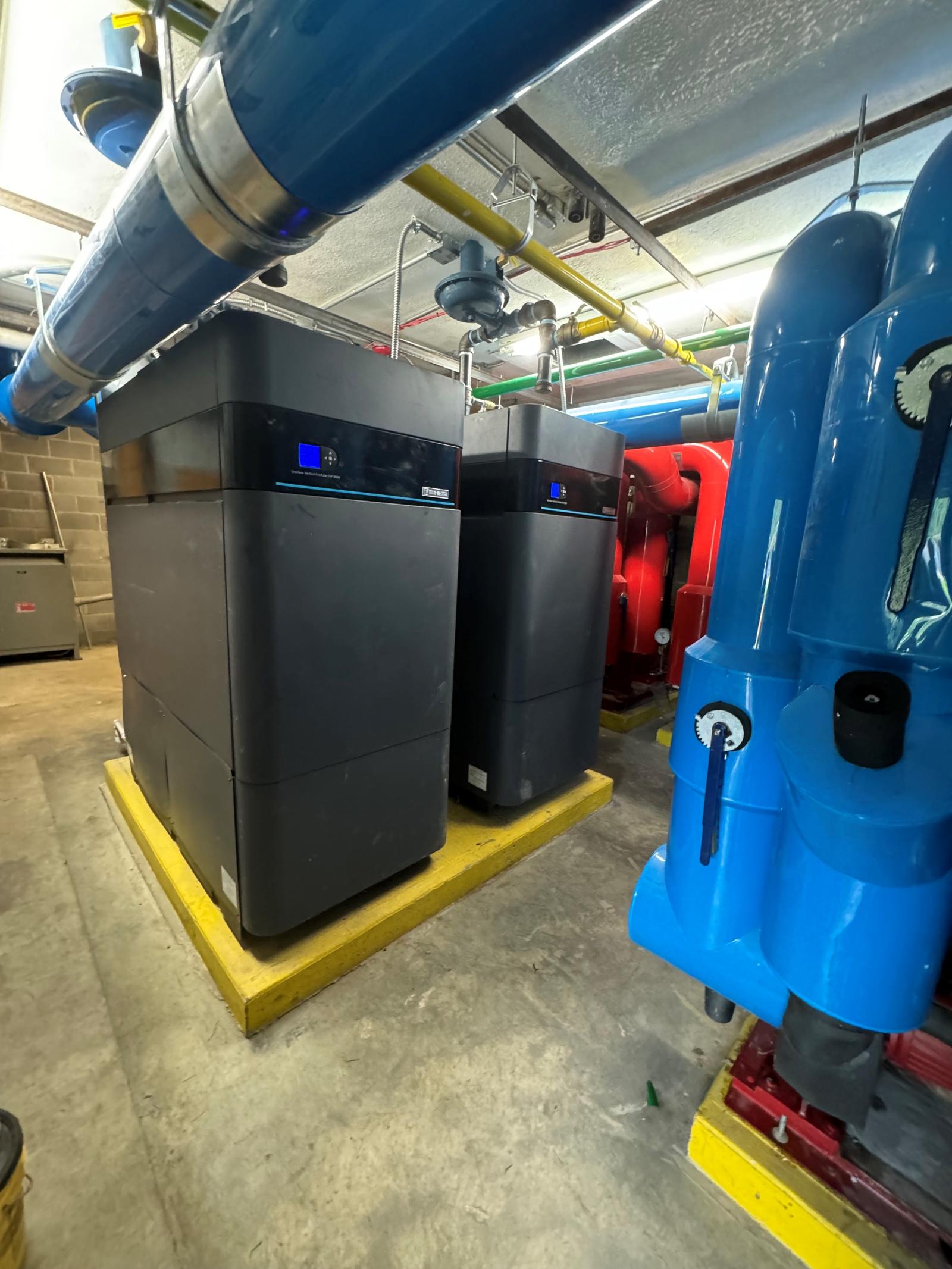
A boiler is only as reliable as the water feeding it. Understanding what a feedwater system does — and why deaeration matters — helps facility teams protect one of their most expensive assets.
A feedwater system replaces the water a boiler loses as steam, while conditioning that water so it doesn’t damage the boiler. It prioritizes reusing hot condensate, heats and treats make-up water, and delivers it steadily so the boiler isn’t shocked by cold, untreated water.
Cold make-up water carries dissolved oxygen and carbon dioxide. Inside a hot boiler those gases become corrosive, pitting steel and thinning surfaces. Raising the water’s temperature drives those gases back out — which is exactly what deaeration is designed to do.
A deaerator heats incoming water with steam and mechanically scrubs it, releasing dissolved oxygen and carbon dioxide before they ever reach the boiler. Well-run deaerators hold the water hot and largely gas-free, dramatically reducing corrosion and thermal shock.
Simpler systems with high condensate return may use a vented feedwater tank; plants that run at higher pressures or take on more make-up water benefit from a pressurized deaerator; surge tanks buffer condensate and protect deaerators from swings. Choosing the right combination is a matter of pressure, make-up volume, and how the plant runs.
Adequate storage volume gives the boiler a steady supply through load swings, and maximizing condensate return means less make-up water to treat and heat — cutting both chemical and fuel costs. Getting these details right is what keeps a steam plant efficient and long-lived.
Have questions about your feedwater system? Feedwater & Deaerator Systems · Preventative Maintenance