
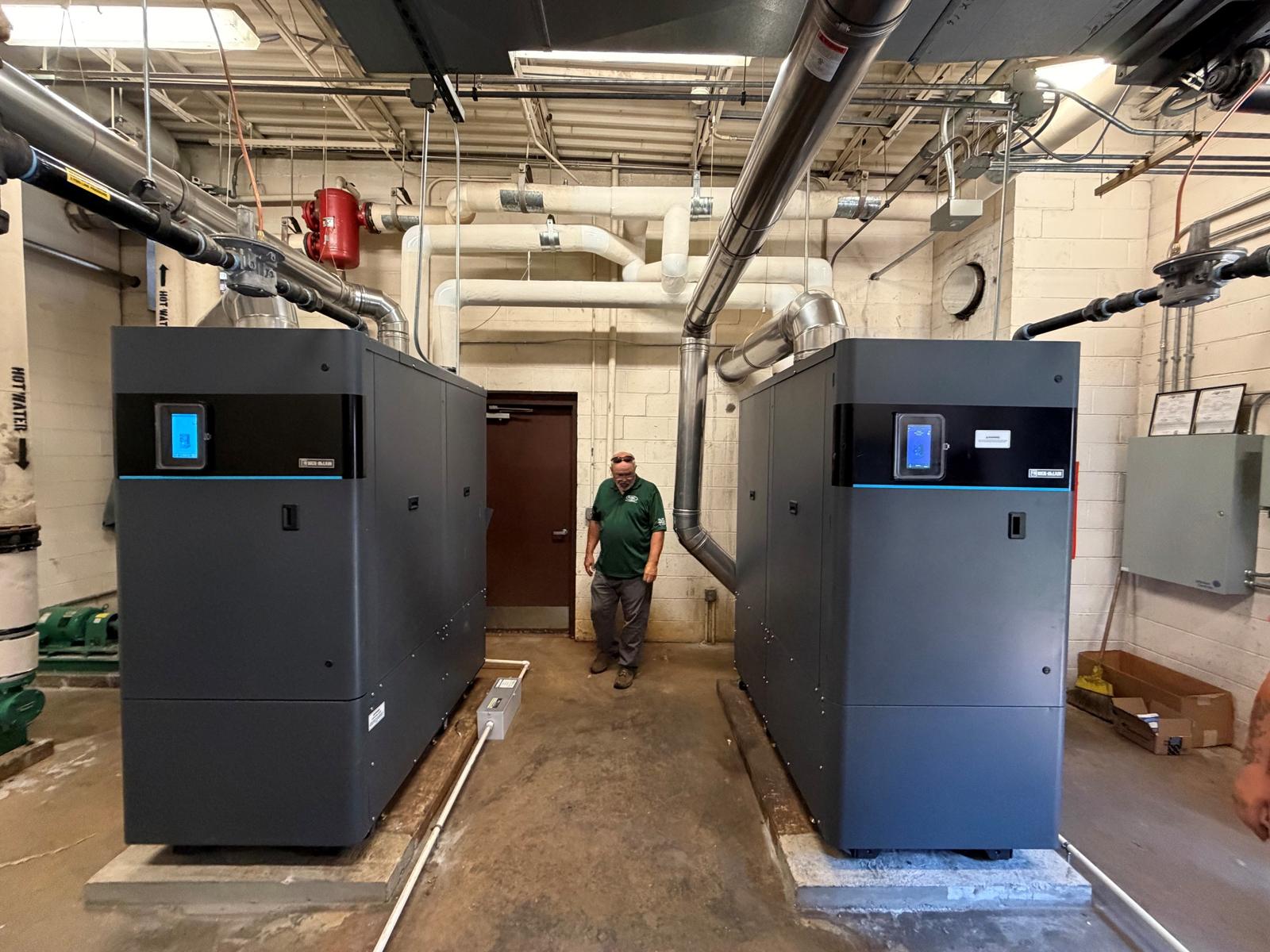
Two of the most common choices for commercial hot-water heating are high-efficiency condensing boilers and traditional cast-iron sectional boilers. Both have a place — the right answer depends on your building, your water temperatures, and your budget.
A condensing boiler extracts extra heat by cooling the flue gases enough to condense the water vapor they contain, capturing latent heat that a conventional boiler sends up the stack. That can push thermal efficiency into the 90–95%+ range — but only when return water temperatures are low enough for condensing to actually occur, which makes system design and controls important.
A cast-iron sectional boiler is built from individual cast-iron sections bolted together around the combustion chamber, fired by an atmospheric or power burner. It’s rugged, forgiving of higher water temperatures, and — because it’s sectional — repairable one section at a time. Efficiency is typically in the low-to-mid 80s.
If your system runs low return temperatures (or can be set up to), a condensing boiler will usually deliver the lowest fuel bills. In high-temperature or steam-adjacent applications where condensing rarely happens, that efficiency advantage shrinks and a well-tuned cast-iron unit can be the more sensible choice.
Cast-iron sectionals are known for long service lives and the ability to replace a cracked section rather than the whole boiler. Condensing boilers use stainless or aluminum heat exchangers and demand closer attention to water quality and condensate handling — well within reach of a good maintenance program, but worth planning for.
New high-efficiency projects and retrofits with low-temperature loops usually favor condensing boilers; rugged high-temperature duty and tight retrofit budgets often favor cast iron. In practice we help facilities weigh load, water temperatures, fuel cost, and capital budget — and sometimes a hybrid of both is the smartest answer.
Ready to compare options for your building? Boiler Replacement · Cast Iron Sectional Replacement